
Challenges in Health Humanities Research Workshop
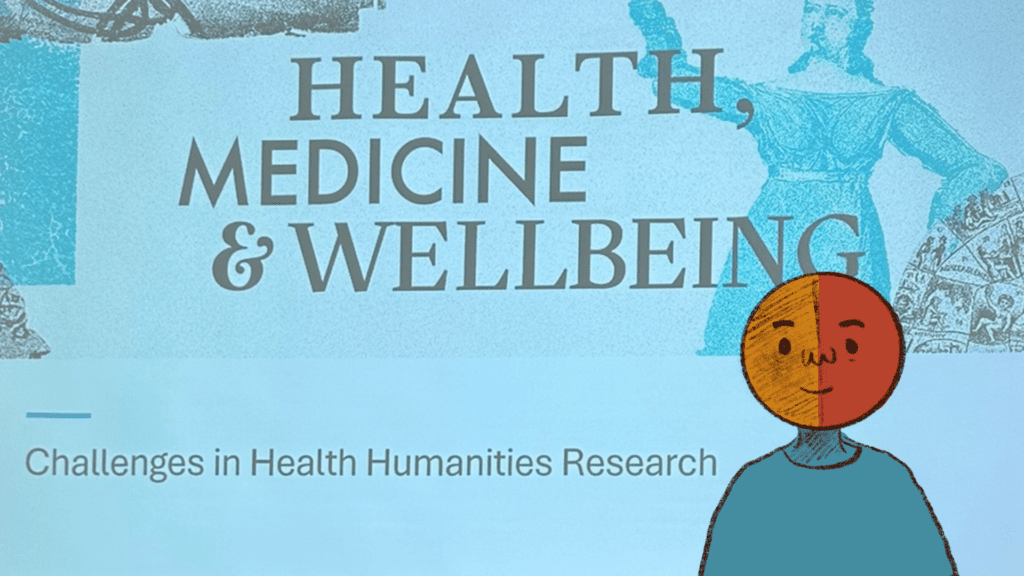
CSAReps’ Principal Investigator, Dr Ailise Bulfin, and Postdoctoral Researcher, Dr Giulia Scapin, recently presented at the “Challenges in Health Humanities Research” workshop organised by the College of Arts and Humanities Health, Medicine and Wellbeing research strand.

On Tuesday, April 28th, 2026, members of the CSAReps team had the opportunity to share their reflections on a vital, yet sometimes rarely talked about aspect of academia: The unique challenges and useful lessons learned by researchers working within the field of Health Humanities.
Challenges of Ethics – Procedural and Protective: Dr Ailise Bulfin’s Presentation

Ailise stated CSAReps team’s prioritisation of working ethically with potentially vulnerable research participants and the care that the team must take with ensuring all of their procedures are safe and following best practice.
She shared about the understandable challenges involved in obtaining ethical approval to work with survivors of child sexual abuse – both young people and adults – and pointed out that it is also important that researchers do not doubly marginalise people who have had this experience by not involving them in research due to procedural challenges.
She concluded by saying that the CSAReps team is happy to share their experience with other Health Humanities researchers who are thinking about doing similar research.
Working with Sensitive Topics & Researchers’ Wellbeing: Dr Giulia Scapin’s Presentation

The Challenges
Giulia shared that emotional exhaustion emerged as one of the primary challenges for the CSAReps team. Investigating the complexities of Child Sexual Abuse (CSA) can lead to constant exposure to distressing stories which can take an emotional toll.
Furthermore, the team reflected on the difficulty of maintaining a clear boundary between being a “researcher” and a “person.” When engaging with sensitive material, it can be hard to leave the emotional weight of the research at the office. The empathy that comes from analyzing these stories could stay with researchers after hours, making it a challenge to mentally step away from the work.
Strategic Coping Mechanisms
To cope with these challenges, Giulia mentioned that the CSAReps project has established a lot of supportive practices and activities which have been useful for the team throughout the project, such as:
1. Shared Reading and Watching
As part of our methods, CSAReps team members frequently read and watch fictional depictions of CSA, through books, films, and TV series – activities that can be distressing. To mitigate the isolation of this work, the team utilizes “Shared Reading” or “Shared Watching” frameworks. Through the CSAReps monthly Fiction Club, the team read or watch, and then discuss these fictional works together. She argued that it helps to transform a potentially distressing individual task into a collaborative and supportive exercise.
2. Team Debriefings
The project fosters an environment of open communication through regular group and one-on-one debriefings with the Principal Investigator. These sessions offer a relaxed, non-judgmental space for CSAReps team members to talk about their emotions and reflect on their personal experiences within the project. They also access some materials for researchers who work on emotionally challenging subjects during these meetings – for example, such as the wellness, self and collective care free online course offered by the Sexual Violence Research Initiative.
3. Intentional Self-Care
Giulia emphasized that intentional self-care is essential to maintaining mental health. Rather than viewing self-care as an afterthought, the project treats it as a necessity to prevent burnout. To maintain self-care, CSAReps’ team members actively engage in diverse personal hobbies outside of work, including crocheting, horse riding, drawing, swimming, hiking, meditating, and cooking.
4. Connecting with Peers
The CSAReps team actively engages with the wider academic and advocacy communities through conferences, seminars, workshops, and other events. By building relationships with fellow Health Humanities researchers and organizations dedicated to preventing and reducing CSA, Giulia and the other team members found it useful to cope with the isolation that can sometimes accompany doing research in this field. These connections provide vital emotional support, being a reminder that they are “in this together”, which can help to combat feelings of hopelessness. Furthermore, she noted that these collaborations can foster vicarious resilience, where witnessing the strength and positive strategies from fellow researchers, advocates, and survivors can inspire and reinforce their shared purpose
5. Professional Training and Further Learning
Continuous professional development is essential for equipping the team with both the conceptual knowledge and the psychological skills needed for this research. Giulia shared that the CSAReps team members regularly participate in training focused on working in this field of research, for instance, to identify burnout and vicarious trauma. This training teaches the team how to recognize signs of psychological distress in themselves and their colleagues, and help to foster a peer support system within the workplace.
6. Professional Psychological Support
Given the challenging nature of CSA research, peer support must sometimes be done with the help of external expertise. The team reflected that talking to psychological support professionals, such as clinical psychologists and therapists, has been instrumental to help them process their emotions and develop healthy coping strategies. The CSAReps project has provided team members with access to these professional resources.
Ultimately, Giulia’s presentation shared an important message to the wider academic community: To produce rigorous research in the Health Humanities area – and frankly, for all disciplines, we must first sustain the well-being of the researchers themselves. By openly addressing the emotional challenges of their work and implementing proactive coping strategies, CSAReps aims to promote a more sustainable and compassionate approach to Health Humanities research.
Written by Maria Olivia Susilo | Research Assistant