Key Insights from the 2026 All Ireland Network on Social Violence Research Conference at University of Limerick
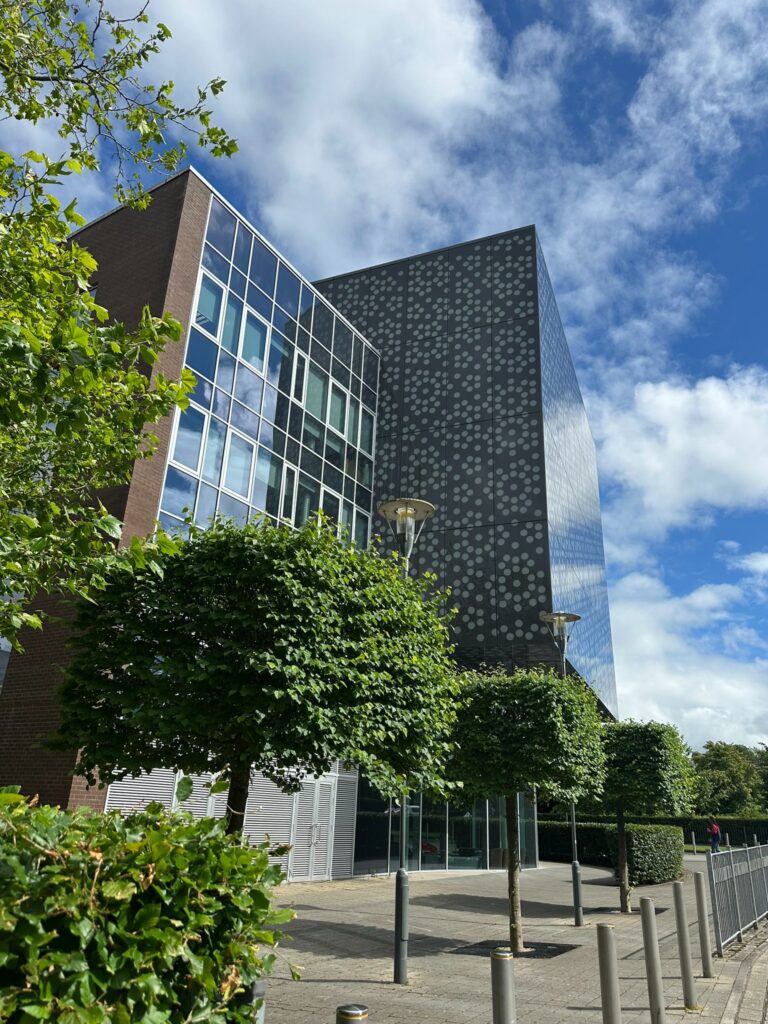
On June 19th, 2026, the CSAReps team headed to the sunlit campus of the University of Limerick. Our research assistant, Olivia Susilo, attended the annual All Ireland Network on Social Violence Research (AINSVR) conference, hosted by the School of Law at the Analog Building.
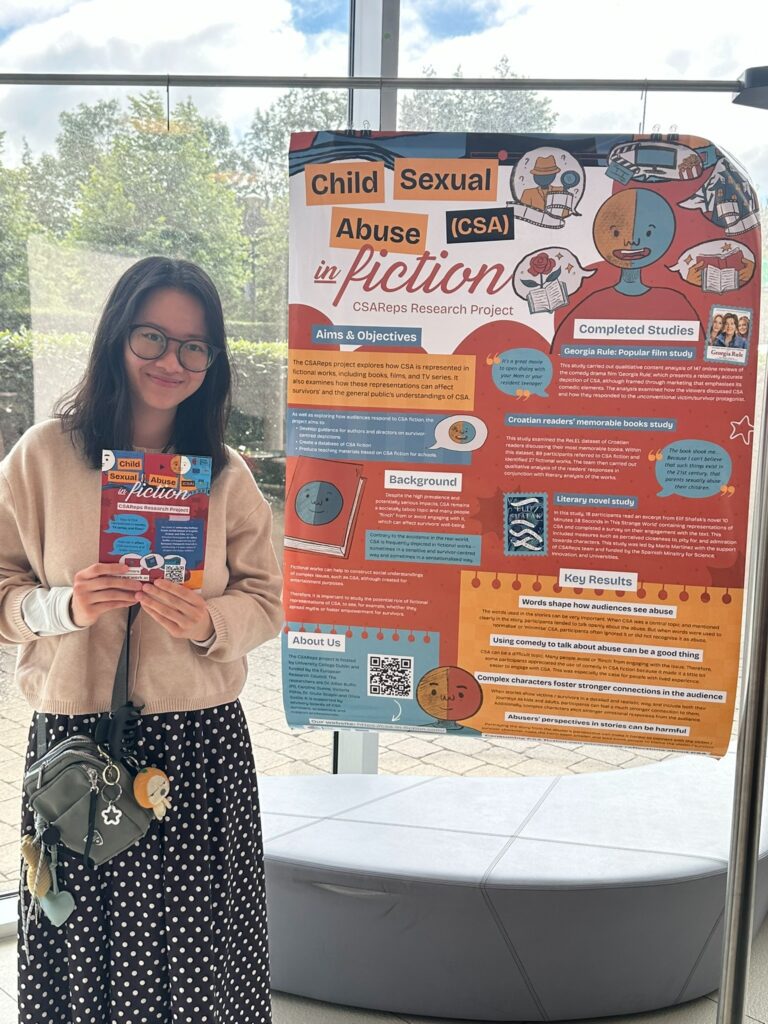
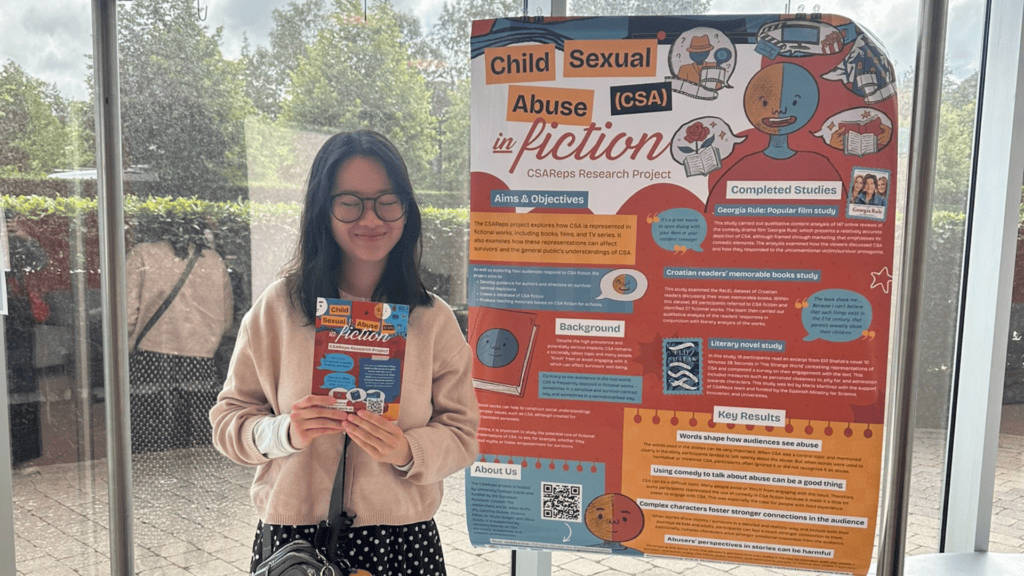
This year’s theme, “Delivering Justice for Victim-Survivors of Sexual Violence: Enduring and Emerging Challenges,” brought together leading researchers from Ireland and abroad. We were also delighted to showcase our own work, presenting the CSAReps project poster in the heart of the conference hall.
Here are the key takeaways from a day packed with powerful, thought-provoking presentations.
1. Bridging the Gap Between Research and Real-World Support
Speaker: Dr. Stephanie O’Keefe, CEO of Cuan
Dr. Stephanie O’Keefe opened the conference by introducing Cuan, Ireland’s new statutory agency dedicated to tackling domestic, sexual, and gender-based violence under the Department of Justice. Dr. O’Keefe highlighted the dangers of coercive control – a damaging form of abuse that can be hard to measure and requires dedicated research to prevent.
She emphasized that to truly support victims/survivors and support centers, we need “good data and good evidence”, especially within the legal system. Dr. O’Keefe closed with an inspiring reminder that to make a difference, we are encouraged to build strong partnerships and turn academic findings into everyday practice.
2. The Dangers of Myths-Based Reasonings in the Courtrooms
Speaker: Professor Penney Lewis, Law Commission of England and Wales
Next, Professor Penney Lewis delivered a detailed keynote on her research project aimed at supporting survivors during the trial process. One of her most vital points was that a survivor’s right to privacy can be threatened when their personal records are brought into court.
Professor Lewis argued that when the defense requests a survivor’s private files, the request must be backed by clear, objective relevance – not fueled by unhelpful stereotypes or biases. She noted that these “myth-based reasonings” frequently come when courts look at Sexual Behaviour Evidence (SBE). To prevent this, she proposed a clear, two-step framework to help support a non-biased and fair court.
3. The Unseen Trauma of Rape Culture
Speaker: Professor Joanne Conaghan, University of Bristol and Adjunct Professor at University of Limerick
In an incredibly energetic and moving session, Professor Joanne Conaghan delivered a simple yet profound statement: “Where there is hurt, there is injustice.”
She described sexual violence as a horrific social practice that causes a “complete annihilation of self.” It splits a person’s life in two: the person you were before, and the person you are forced to be after. This deeply echoes our own work at CSAReps, where we examine how child sexual abuse can deeply impact a survivor’s life story. Professor Conaghan also criticized how modern trials can re-traumatize survivors. The system often turns a trial into an unhelpful “competition” between the defense and the victim, for instance, by urging victims/survivors to hand out private counseling – and that we must find a way to make trials a more supportive experience for everyone involved.
4. Protecting Our Youth: Legal Shifts and Better Education
Speaker: Dr. Elizabeth Agnew, Queen’s University Belfast
Dr. Elizabeth Agnew shifted the focus to younger generations with her presentation, “What Does ‘Delivering Justice’ Look Like For Young People? Challenges and Barriers.” She painted a horrible picture of the harsh realities that many youths face today, including the normalization of weapons, coercive control, child sexual abuse, and peer-to-peer harm.
To protect young people, Dr. Agnew offered some concrete solutions. First, Northern Ireland should raise its Minimum Age of Criminal Responsibility (MACR) from 10 to 14 years old to match international human rights standards. Second, she highlighted education as our strongest shield, calling for comprehensive Relationships and Sexuality Education (RSE) across all schools to teach young people about safety and boundaries before harm happens.
5. Inside the Jury Room: Confronting Hidden Biases
Speaker: Dr. Siobhan Weare, Lancaster University
Dr. Siobhan Weare shared fascinating insights from her research project, “How Do Juries Decide? (Mock) Jury Decision Making in Cases on Male Sexual Victimization.” Her team set up realistic mock trials in a law school courtroom with 10 jury participants, testing two distinct scenarios: A male-on-male rape case, and a female-on-male “force-to-penetrate” (FTP) case.
The results from the deliberation room were eye-opening. Dr. Weare observed multiple victim-blaming among jurors, who often relied on homophobic myths to rationalize the abuse. Furthermore, jurors struggled with the legal standard of proof. Many admitted they hesitated to vote “guilty” because they were terrified of “ruining” the accused person’s life.
6. Changing Patterns in Child Sexual Abuse
Speaker: Dr. Karen Hand, Sexual Abuse Researcher & CSAReps Podcast Guest
Dr. Karen Hand, a prominent sexual abuse researcher, who was the inaugural CSAReps podcast speaker presented striking insights from her the recent CSO Sexual Violence Survey of Ireland (2023), which revealed an interesting change: While CSA perpetrators from traditional authority figures have statistically decreased, perpetration involving boyfriends, girlfriends, and peers has risen, in line with international trends seen in the UK, USA and Australia. Worryingly, Dr. Hand’s ground-breaking research on Irish attitudes to CSA shows that many young people have yet to recognize that their romantic partner can be a perpetrator, signaling an urgent need to educate young people and adults on boundaries, consent, and healthy relationships.
7. How Courtroom Narratives Can Blindside Justice
Speakers: Dr. Kirsty Duncanson and Dr. Emma Henderson, La Trobe University, Australia
Traveling from across the globe, Dr. Kirsty Duncanson and Dr. Henderson shared their meticulous analysis of trial transcripts from adult rape cases in Australia.
They discovered a dangerous pattern: When faced with new, complex information in a courtroom, people can naturally try to fit it into familiar, pre-existing stories – which often means defaulting to old rape myths. Adding to the problem, the researchers found that barristers frequently lean on these myths during cross-examination – which brings the need to explore this in the educational system.
8. A Dedicated Legal Support for Children
Speaker: Paul McCann, Sexual Offences Legal Advisers (SOLA)
Paul McCann introduced the vital work being done by Child SOLA. This organization steps in to provide qualified, independent, and free legal advice to children, teenagers, and their guardians from the moment an offense is reported right up until a trial begins.
By providing young survivors their own legal advocates early on, Child SOLA empowers them to make informed choices, protects their privacy, and ensures their voices aren’t lost in a confusing legal system.
9. Changing Access to the Evidence: The Power of Intermediaries
Speakers: Dr. Áine Kearns (University of Limerick) & David O’Shea (Practice Manager, Speech and Language Therapist, and Registered Intermediary)
The final presentation introduced an exciting new program at the University of Limerick: The Professional Diploma in Intermediary Studies. Dr. Kearns and David O’Shea explained the role of a Registered Intermediary – a neutral communication specialist who helps vulnerable individuals (including people with dementia, brain injuries, neurodivergent traits, and many more) understand court proceedings and give their best possible evidence.
Intermediaries work in real-time. They advise lawyers on how to structure questions, monitor when a witness is getting distressed or just passively agreeing, and assess everything from speech clarity and attention span to a person’s understanding of time. As they beautifully put it to wrap up the session: “Intermediaries don’t change the evidence; we change the access to it.”
Moving Forward Together
The AINSVR conference was a beautiful reminder of why we do this work. From the courtroom to the classroom, the challenges facing survivors of sexual violence are evolving, but so are the tools we have to fight them. Listening to these dedicated researchers and practitioners reinforces our mission at CSAReps, which is to facilitate CSA victims/survivors’ voices to be heard.
Thank you to the University of Limerick for hosting the AINSVR conference, and to everyone who stopped by to engage with our CSAReps poster!
Written by Olivia Susilo | Research Assistant