
The Power of Narrative: CSAReps Present at the 41st ISSN Narrative Conference at the Aarhus University, Denmark
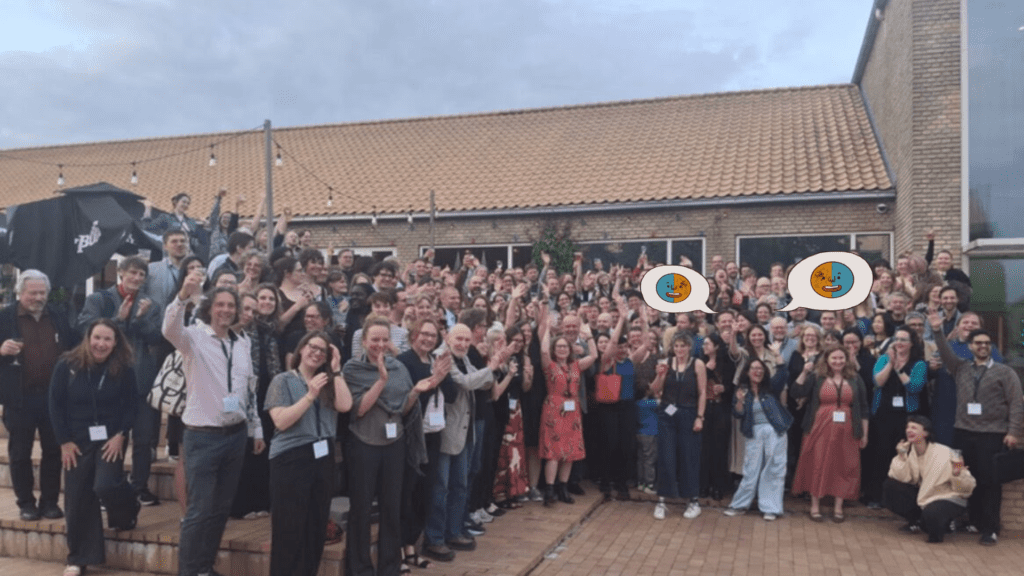
From June 4th to 6th, 2026, the global narrative community gathered at Aarhus University in Denmark for the long-anticipated 41st Narrative Conference of the International Society for the Study of Narrative (ISSN). We are thrilled to share that our postdoctoral researchers, Victoria Pöhls and Dr. Giulia Scapin, traveled to the beautiful city of Aarhus to represent CSAReps and share our project’s latest research.

Hosted this year by the Narrative Research Lab and the Centre for Fictionality Studies at Aarhus University, the annual ISSN conference is a massive international forum. It brings together scholars and researchers from around the world to explore narrative research across various genres and mediums.
CSAReps’ Presentation
Victoria and Giulia delivered a detailed presentation based on CSAReps’ research project, titled “‘Prejudices are there to be destroyed’: The Dark Side of Lolita.”
Their presentation addressed the complex narrative of Vladimir Nabokov’s ‘Lolita’ – one of the most famous and widely read fictional work with child sexual abuse (CSA) representation that was also mentioned frequently in a corpus of 1005 Croatian readers that talked about the most impactful books they ever read.
Victoria and Giulia shared how we looked into the intratextual dimensions of the texts, such as textual structures and narrative choices – and the impact on readers, including cognitive and emotional responses from engaging with these fictional works, thereby being able to grasp the interplay between style and impact
For instance, by analyzing what happens when readers engage with the fictional works with CSA representation, especially in the case of Lolita, four interesting findings emerged:
1. The harm of ‘normalizing’ CSA
When stories use normalized language in describing CSA, readers can often fail to mention or even deny that CSA was there.
2. Readers can experience various emotions
While readers most frequently mentioned experiencing negative emotions, like sadness and shock when reading fiction with CSA representations, some also mentioned positive aesthetic emotions that helped them to engage with the difficult topic
3. Readers can have post-reading reflections
The fictional depictions of CSA did prompt some readers to spontaneously reflect on CSA in the real-world, especially when CSA was a central theme and mentioned frequently throughout the story.
4. Portraying the story from the abusers’ point of view can be harmful
On the other hand, one thing we learned from Lolita during our studies is that stories that use the CSA perpetrators’ perspective can be harmful. This can make it harder for readers to connect with the victim/survivor character, make the harm seem smaller, and lead some people to blame the victim/survivor.
Looking Ahead
Victoria and Giulia’s participation at ISSN 2026 provided a wonderful opportunity to network with narrative scholars and spread crucial awareness to how we read and interpret depictions of CSA in contemporary culture. It was also fruitful to see how many scholars engaged with related topics, such as depictions of rape or trauma. And the “Narrative Dance” was a highlight as always!
We are incredibly proud of their contribution to this year’s conference and look forward to seeing how their insights will continue to shape future guidance for creative professionals, support professionals, and the general public.
Written by Olivia Susilo | Research Assistant