
“Sad Girls” and “Not-So-Sad Girls” in CSA Fiction: Depictions of Victim-Survivors
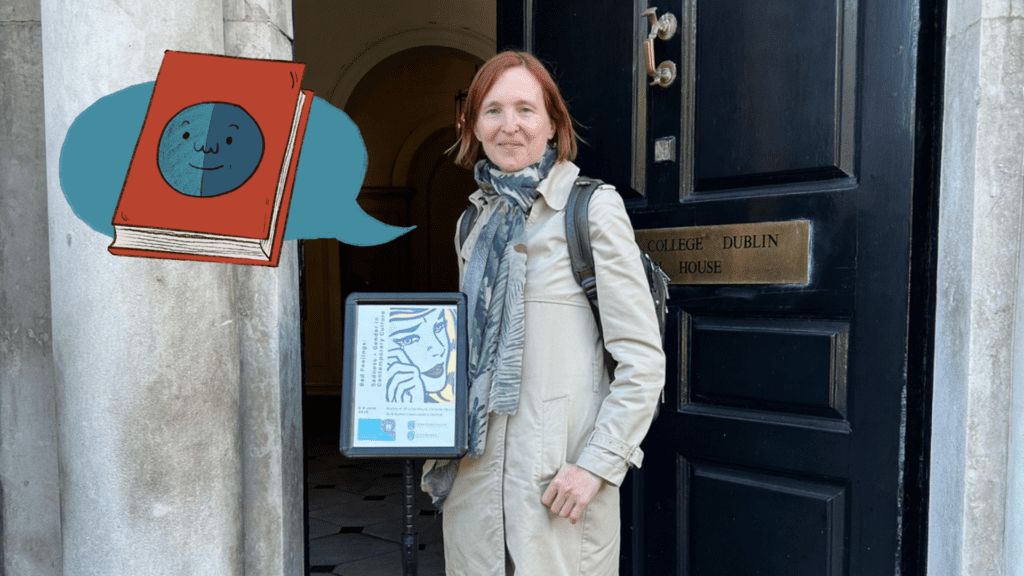
On June 8th and 9th, 2026, the University College Dublin Humanities Institute hosted the “Bad Feelings: Sadness and Gender in Contemporary Culture” conference at the Museum of Literature Ireland (MoLI). The conference explored the intriguing “sad girl” trope in contemporary culture and literature, tracing its presence across works by creative professionals such as Sally Rooney and Lana Del Rey. Bringing together interdisciplinary perspectives, the event examined how the “sad girl” is represented and interpreted in cultural texts.
Dr. Ailise Bulfin, CSAReps Principal Investigator, presented at the conference with a presentation titled “Investigating Fictional Representations of Child Sexual Abuse: Thinking about audience’s response to sad girls and not-so-sad girls”.
The “Sad Girls”
In her presentation, Dr. Bulfin highlighted a recurring archetype in fictional representations of child sexual abuse (CSA): What might be identified as the “preferred” or “ideal” victim-survivor. These are often young women characterised by innocence, vulnerability, and helplessness and therefore, are figures who often elicit sympathy from audiences.
One example comes from our research on 10 Minutes 38 Seconds in This Strange World (2019) by Elif Shafak. This survivor-centred novel follows Leila, a rural Turkish girl who experienced intrafamilial abuse, is later exploited in the sex trade, and is ultimately murdered. Leila’s story is framed as deeply tragic, and research participants responded with strong expressions of empathy and sympathy. Comments such as “I sympathise with her a lot and am just sad for her” and “I could only think of Leila throughout the whole story because I felt her pain at some level” reflect the sympathy audiences often feel with this kind of “sad girl” narrative.
However, although Leila is the main character, participants expressed greater liking and admiration for a bystander character – Leila’s friend Sinan – and viewed him more often as a role model. This suggests that connecting with a victim who has such a tragic outcome is emotionally challenging for readers, and that engagement with the supportive bystander Sinan is more comfortable. Or in other words, that Leila’s experience is unbearably sad.
What Happens When She’s a “‘Not-So-Sad’Girl”?
On the other hand, not all victim-survivors in CSA fiction conform to this commonly used trope. CSAReps research also examined the film Georgia Rule, directed by Garry Marshall. The film offers a different and considerably realistic portrayal of the long-term effects of CSA on its protagonist, Rachel, and her family.
Rachel’s behaviour – which is marked by hypersexuality and defiance – is presented as an impact of unresolved trauma from sexual abuse by her stepfather when she was a child. Yet because Georgia Rule also blends a difficult topic with comedic elements, Rachel is not usually perceived as the conventional traumatised “sad girl.” Instead, she often shows her strength and agency throughout the film.
Interestingly, in contrast to audience responses to Leila, very few viewers expressed sympathy for Rachel. Empathy tended to emerge only among a small cohort of viewers with personal experience or prior awareness of CSA. For instance, one participant remarked, “Lohan [Lindsay Lohan, who played Rachel]’s character was a total obnoxious skank—was the audience supposed to be sympathetic?”
This contrast raises an important question: What happens when victim-survivors do not perform sadness in ways audiences recognise or expect?
Rethinking the Narrative
These contrasting audience responses can reveal the limitations of the “sad girl” archetype in CSA fiction. While stories like Leila’s can evoke compassion, they also risk reinforcing fixed ideas of what a CSA victim/survivor should look like. Also narratives of extreme suffering, like 10 Minutes, potentially risk pushing viewers away. Characters like Rachel challenge these expectations, reminding us that trauma does not always manifest in visible presentations of sadness.
By examining both “sad girls” and “not-so-sad girls,” CSAReps’ research encourages us to think more critically about representation in fiction. Ultimately, expanding our understanding of survivor narratives may help create space for more realistic and inclusive portrayals of CSA victims/survivors – ones that do not depend on sadness alone to be believed, understood, or deserving of care.
Written by Olivia Susilo | Research Assistant and Dr. Ailise Bulfin | Principal Investigator